
XRP risks crashing to $0.80 as extreme fear threatens recovery
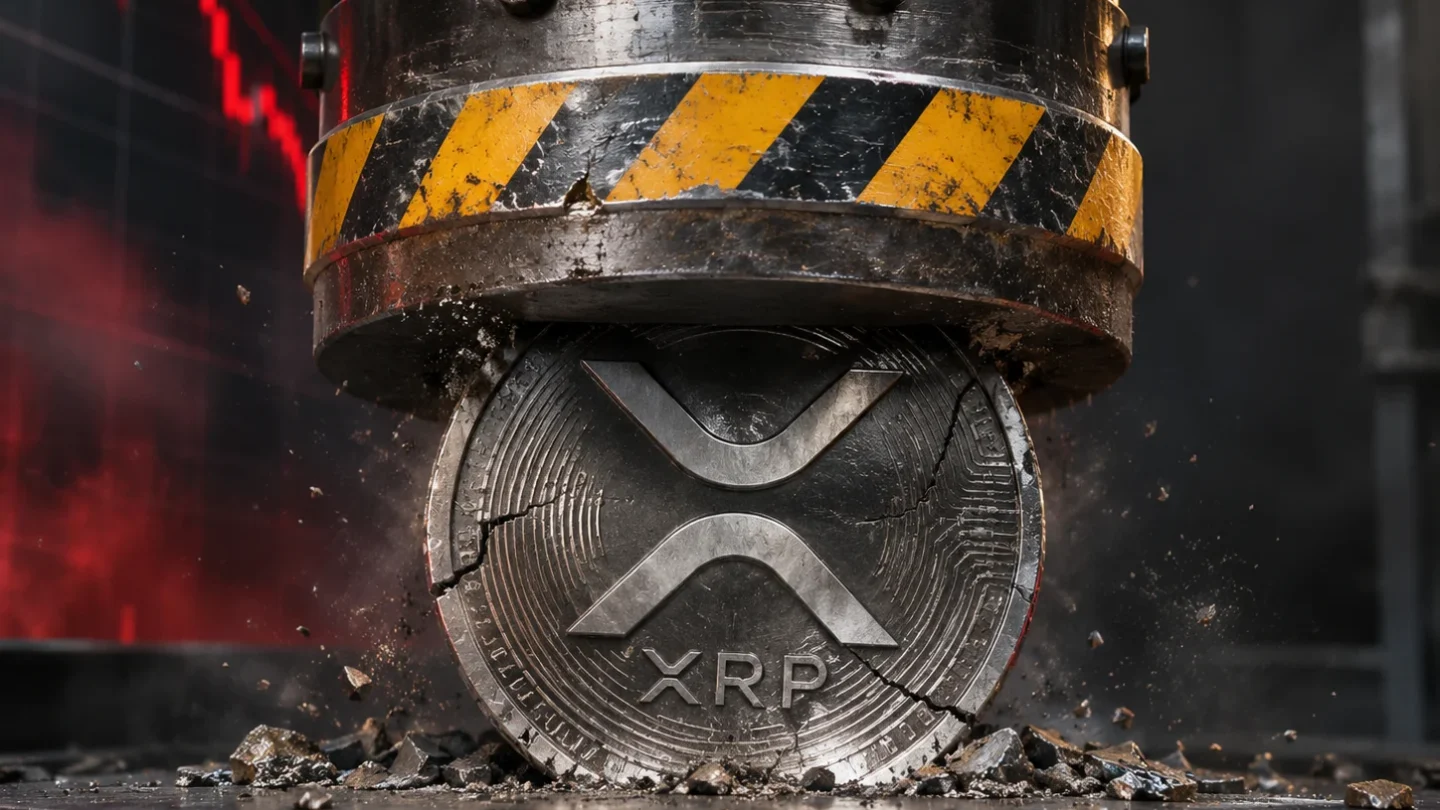
Key takeaways XRP declines nearly 3% after failing to break above $0.96, triggering liquidations of leveraged positions below $0.94. The upcoming Core PCE Price Index could intensify selling pressure if monthly inflation exceeds the expected 0.3%. A sustained breakdown below $0.90 could trigger a liquidation cascade toward $0.87 and potentially $0.80. XRP extended its losses…

Key takeaways
- XRP fell nearly 3% after failing to clear resistance at $0.96, causing leveraged long positions below $0.94 to be liquidated.
- The upcoming Core PCE Price Index data could intensify selling if monthly inflation comes in above the anticipated 0.3%.
- A persistent break below $0.90 risks triggering a chain reaction of liquidations down to $0.87 and potentially toward $0.80.
XRP extended its downward trajectory on Wednesday, dropping almost 3% as broad-based bearish sentiment continued to weigh on the digital asset market.
The token made a brief attempt to climb past $0.96 earlier in the week but encountered strong selling pressure, which triggered multiple clusters of liquidations below $0.94.
XRP managed to find interim support around $0.91, but pending economic figures from the US and deteriorating chart indicators threaten to undercut any potential rebound.
XRP faces renewed selling pressure ahead of US inflation data
The impending release of the Personal Consumption Expenditures (PCE) Price Index could act as a pivotal catalyst for XRP and the wider cryptocurrency sector.
Economists project that the Core PCE Price Index—the Federal Reserve’s preferred inflation metric—will show a 0.3% month-over-month increase.
An inflation reading that exceeds expectations could solidify sentiment around prolonged monetary tightening, placing additional strain on risk assets.
Market participants are currently anticipating interest rate hikes in both December and January. However, persistently high inflation figures could spark speculation of a more aggressive 50-basis-point increase at the December policy meeting.
This scenario could further suppress demand for digital assets as capital moves toward lower-risk, yield-bearing alternatives.
Overall market sentiment has severely weakened, with the Crypto Fear and Greed Index sliding to 9, marking its lowest score since February.
This extreme fear level reflects deep pessimism among market participants amid lingering macroeconomic uncertainty.
At the same time, the Democratic victory in the US midterm elections has created regulatory ambiguity surrounding prospective cryptocurrency legislation.
Should investors begin to expect slower momentum on digital asset bills, XRP could steadily give up a substantial share of the gains it registered during the Trump administration.
Despite the broader market gloom, derivatives metrics suggest XRP could see a brief upward bounce before resuming its downward trend.
Data from CoinGlass’s liquidation heatmap highlights clusters of leveraged short positions concentrated between $0.93 and $0.94. A movement into this range could trigger forced liquidations among short sellers, creating a temporary boost in buying volume.
However, any such rally would likely stem from a liquidity grab rather than a fundamental turnaround in market sentiment.
XRP price forecast: Liquidity sweep could trigger a decline to $0.80
XRP’s one-hour chart indicates a notable order block around $0.934, where fresh selling pressure is expected to gather.
Momentum indicators continue to deteriorate, with the Relative Strength Index (RSI) edging down toward 26. Furthermore, XRP has dropped below its 200-period Exponential Moving Average (EMA), reinforcing the short-term bearish technical structure.
A liquidity sweep above $0.94 followed by a validated shift in market structure could open the path toward the $0.87 support level.
A decisive breakdown below this psychological boundary could spark a wave of automated liquidations, accelerating XRP’s drop toward its short-term downside target of $0.80.
For now, XRP’s outlook remains dominated by sellers as severe market fear, inflation concerns, and weakening technical indicators continue to weigh on price action.
While a temporary move back toward $0.94 remains possible, an inability to hold gains above that level could set up the asset for another substantial decline.